
Free written scope consultation - allowances, timeline, and change-order rules on paper before a single trade is scheduled
Quikrete Home Additions & ADU: The Orlando Owner’s Guide
If you’re planning a home addition or ADU in Orlando and want Quikrete products used correctly, we can help you spec, price, and install the concrete materials the right way. A full home addition using Quikrete concrete typically runs $45,000 – $130,000 in Orlando, while a detached ADU lands between $90,000 – $220,000 depending on foundation type, slab size, and finish level. Most owners realize they have a concrete problem when they see hairline cracks spreading across a slab, moisture wicking up through the floor, or a foundation edge that’s started to spall (chip and flake away in sheets).
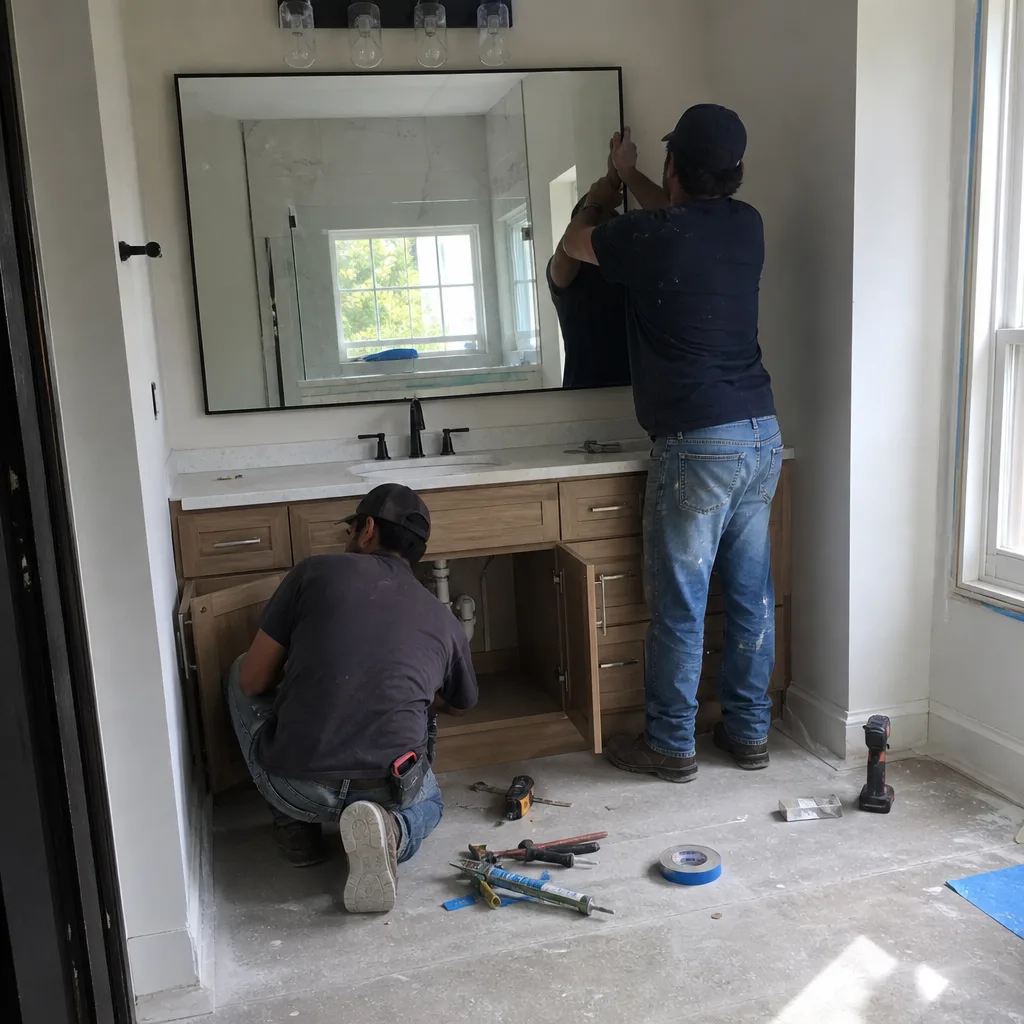
Before we get into the details, one thing worth knowing: Penhallow Remodeling Orlando is an independent general contractor. We’re not affiliated with Quikrete, but we work with their products every week because they’re predictable, widely available in the Orlando market, and hold up to Florida’s ground moisture when mixed and poured correctly.
And if you’ve got a Quikrete bag left over from a previous project and you’re trying to figure out whether it’s still good, we’ll cover that too.
Which Quikrete Home Addition & ADU Products This Applies To
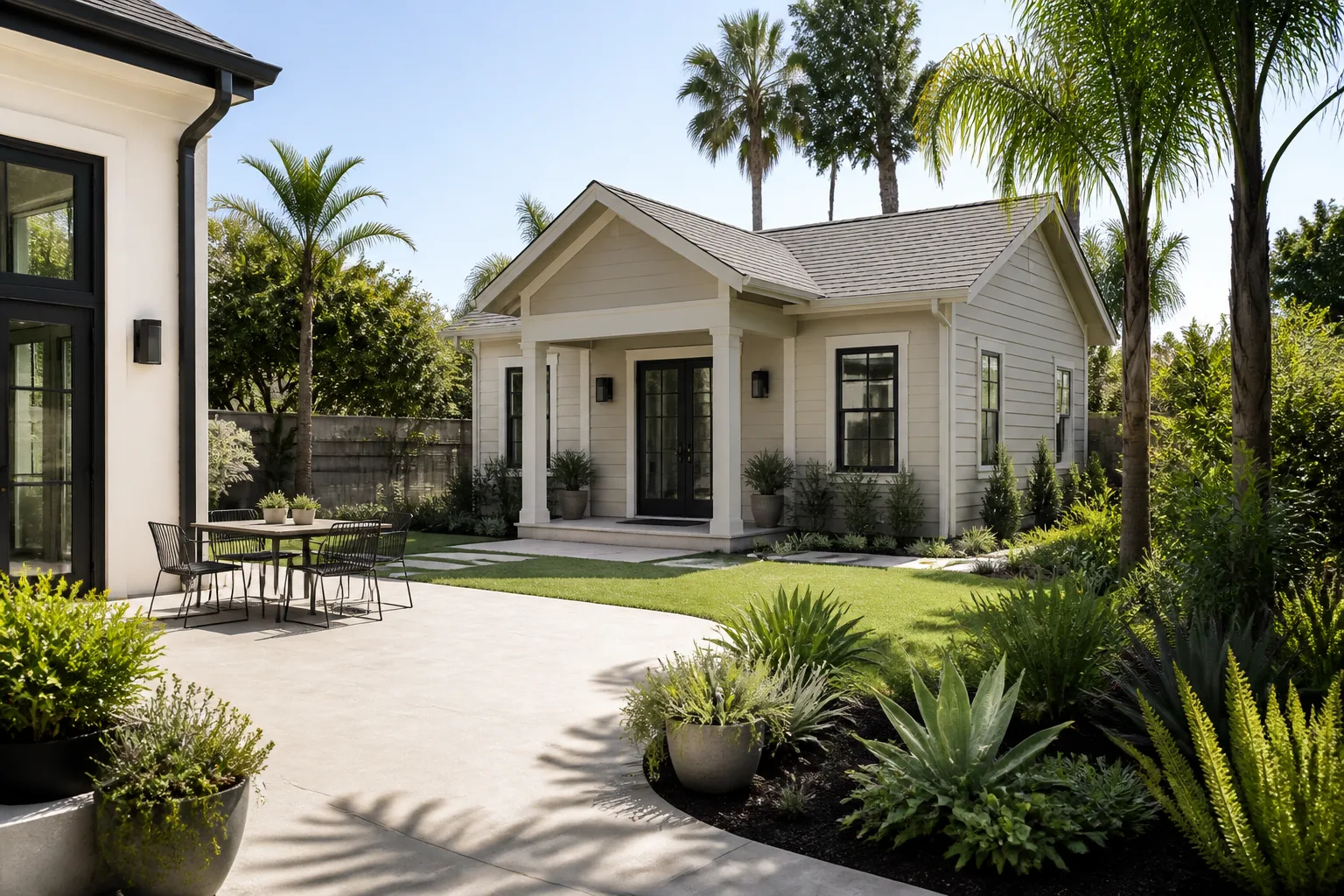
Quikrete makes a lot of concrete products, but for home additions and ADUs in Orlando, we’re typically working with four specific product groups. Each one has different mixing requirements, cure times, and compatibility concerns.
Quikrete Concrete Mix (1101) is the workhorse for slab pours, footings, and stem walls. It’s rated at 4,000 psi, which meets Florida Building Code requirements for residential foundations. Quikrete Crack-Resistant Concrete Mix (1006) includes reinforcing fibers and is what we recommend for ADU slabs in Orlando because our expansive clay soils in neighborhoods like Conway and Azalea Park shift seasonally, and the fiber reinforcement reduces micro-cracking during the first cure cycle. Quikrete Fast-Setting Concrete Mix (1004) sets in 20 – 40 minutes and is what we use for fence posts, mailbox bases, and small footings where you don’t want to wait overnight. And Quikrete Mortar Mix (1102) is for block work on stem walls and ADU foundations.
The compatibility gotcha most Orlando homeowners don’t know: if your addition’s slab was originally poured with plain 1101 mix, don’t patch cracks with fast-setting mix. Fast-setting mix cures at a different rate and will create a cold joint that cracks again within a year. We match the original mix type on every repair we do.
One more thing to check: Quikrete prints a 4-digit product number and a date code on every bag. If the date code is older than 12 months and the bag has been stored in a Florida garage, the cement inside has almost certainly started hydrating from humidity. That bag is going to cure weak, no matter how good your pour is.
Styles & brands we work with







Signs Your Quikrete Home Addition or ADU Concrete Is Failing
- Hairline cracks appearing within 30 days of the pour. This usually means the mix was too wet, the slab cured too fast in Orlando heat, or control joints weren’t cut at the right spacing. Florida’s summer sun will flash-cure a slab in hours if you don’t damp-cure it properly.
- Cracks that widen seasonally. If a crack opens in January and tightens in July, you’ve got expansive soil movement under the slab. This is common in East Orlando near the Econlockhatchee River basin. The fix usually means a pier-and-beam correction, not just a surface patch.
- Spalling along slab edges. That chipping, flaking surface is a sign of a weak top layer, typically from overworking the concrete during finishing or adding water to the mix on site. Spalling doesn’t usually threaten the structure, but it looks bad and it will keep getting worse in Orlando’s wet-dry cycle.
- White powdery residue (efflorescence) on the slab surface. Water is moving through the concrete and carrying minerals up. In an ADU with flooring already down, this will eventually lift vinyl planks or stain carpet. It’s a moisture barrier problem, not a cosmetic one.
- Cracks that run in a stair-step pattern through block walls. This is a settlement sign, not a curing issue. Stair-step cracking along mortar joints in a stem wall usually means the footing moved, and that’s a structural concern you should have looked at by a licensed contractor before it spreads.
See the difference
 Before
 After
After Before
 After
After Before
 After
AfterReplacement Cost & What’s Included
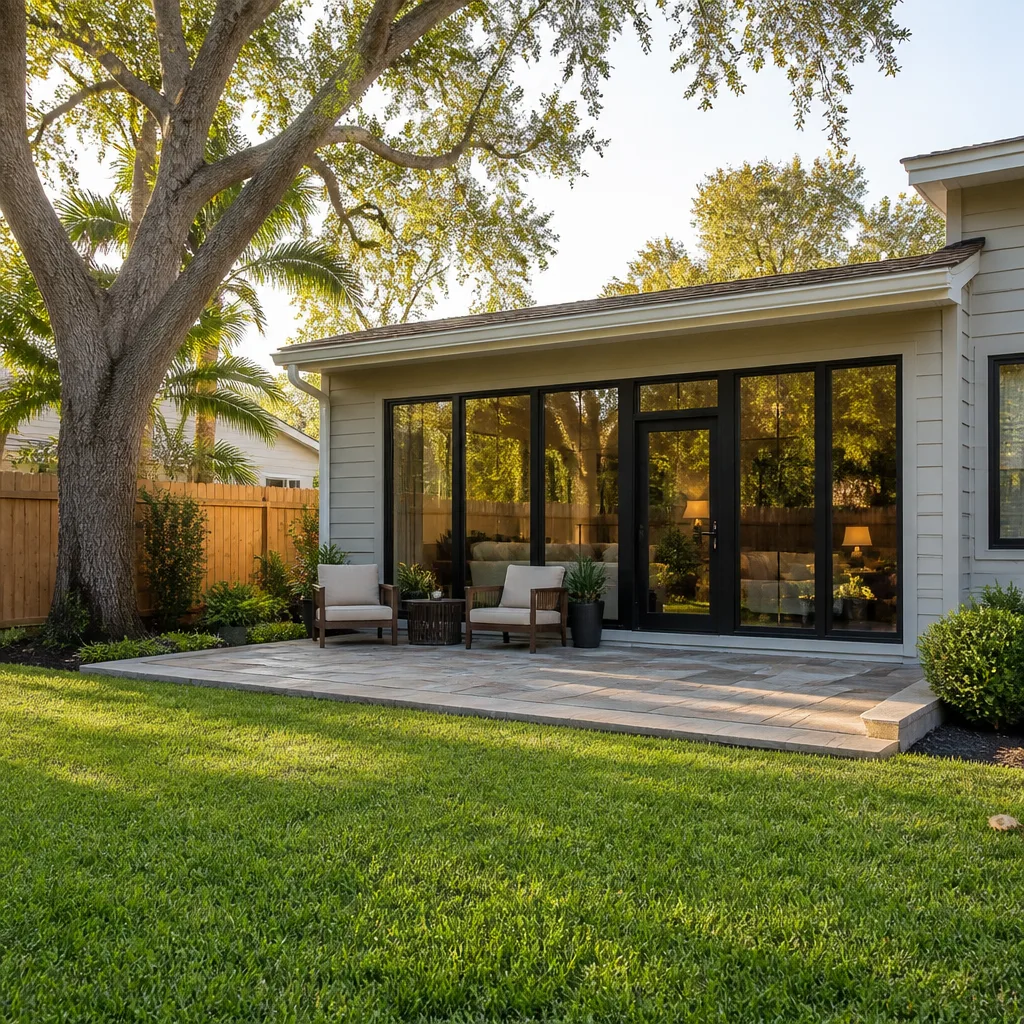
For Orlando homeowners, here’s the honest pricing picture using Quikrete materials:
- Full home addition (ground-up): $45,000 – $130,000, with the concrete portion (footings, slab, stem walls) typically representing $9,000 – $22,000 of that depending on footprint, rebar schedule, and finish.
- ADU construction (detached): $90,000 – $220,000. A standard 600-square-foot ADU slab in Orlando runs roughly $5,500 – $9,000 including formwork, rebar, Quikrete materials, and placement.
- Garage conversion: $30,000 – $80,000, with concrete work minimal if the existing slab is sound, but expect $2,500 – $6,000 if the slab needs grinding, leveling, or partial replacement.
What drives the range? Lot access, soil condition (a bad soil report in MetroWest or College Park can add pier work), slab thickness, and whether your Orlando property sits in a flood zone that requires elevated footings. Every price we give you is written before work starts, and that number holds. If the concrete fails inside our 365-Day Done Right Promise, we come back and fix it at no charge. That’s the rule Trevor Nash set when he built this company, and it’s the rule we work under on every single job.
Key Takeaways
- Quikrete date codes older than 12 months are usually compromised by Florida humidity.
- Match the original mix type when patching, or the new concrete will crack again.
- Home additions in Orlando run $45,000 – $130,000; detached ADUs run $90,000 – $220,000.
- Stair-step cracks in block walls are structural. Don’t wait on those.
- Every job gets a written price up front and a 365-Day Done Right Promise in writing.
DIY or Call Us?
Pouring concrete is one of those trades that looks doable on a Saturday morning and rarely is. You can absolutely mix Quikrete in a wheelbarrow and set fence posts or fill a small pad. By the time you’re talking about a room addition or ADU foundation, you need grading, formwork, rebar placement, vapor barrier, and a pour that hits 4,000 psi without cold joints. You need a concrete pump truck for any slab bigger than about 400 square feet. And you need a licensed contractor because the City of Orlando’s building department is going to want engineered drawings and inspections before they’ll sign off on a certificate of occupancy for that ADU.
What you can safely do yourself: check your existing slab for the failure signs above, clean and seal small non-structural cracks, and keep water draining away from the foundation. What you shouldn’t do: pour a structural slab off a YouTube video. If concrete goes wrong, it goes wrong in a way that costs three times as much to fix as it would have cost to do right the first time.
If you suspect a structural issue or you’re ready to start a project, call (850) 427-6454. Give you the number first, then pick up the tool. That’s how we work.
FAQs
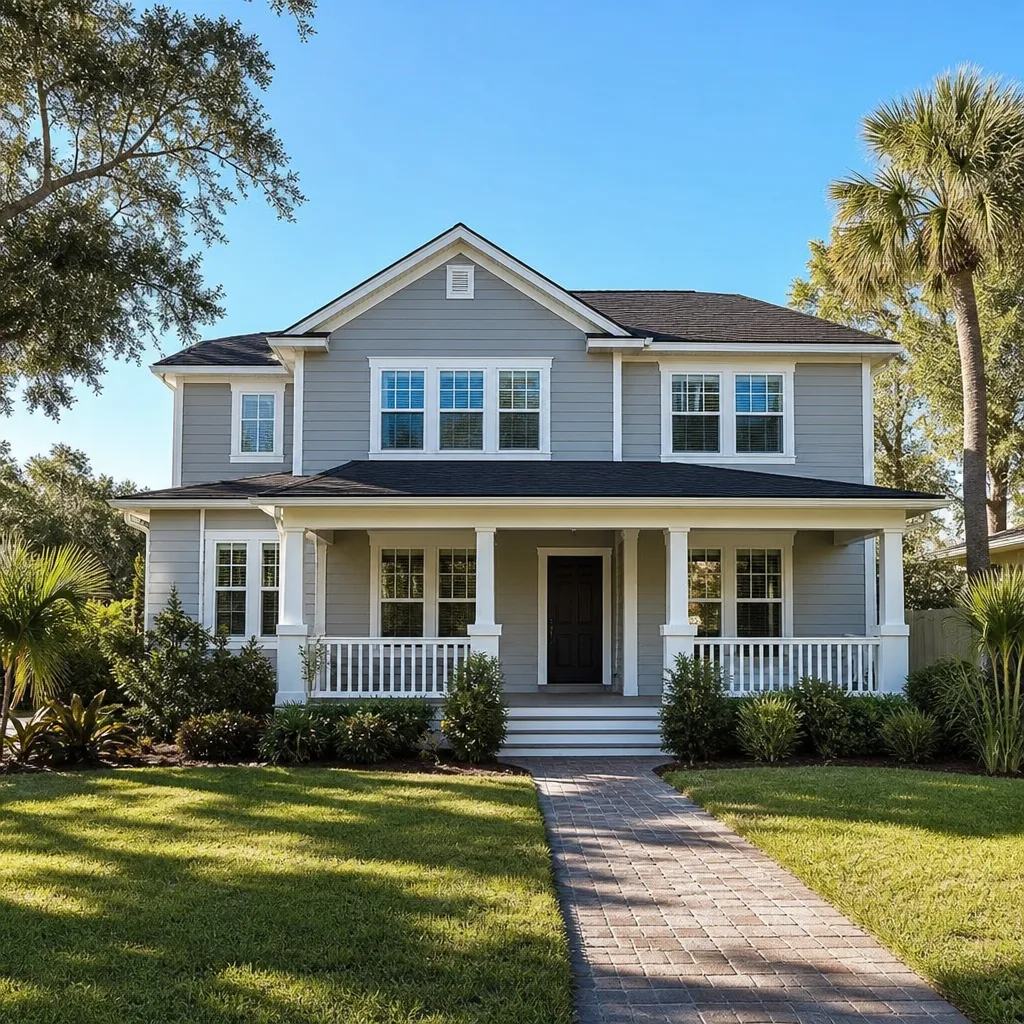
A properly mixed and cured Quikrete slab on a sound subgrade should last 50+ years in Orlando. The things that shorten that lifespan are poor drainage, expansive soil movement, and improper curing during our hot season. We also stock and install materials from KraftMaid, Cambria, and Silestone on these projects, so every layer of the addition is built to the same standard.
Yes, if the cracking is cosmetic and stable. We can grind, seal, or epoxy-inject cracks on slabs that haven’t shifted. If the slab has dropped or the crack widens seasonally, replacement or underpinning is the honest fix, and we’ll tell you that on the first visit. Call (850) 427-6454 for a written assessment, and the estimate is free.
From formwork to finished slab, most addition foundations run 5 – 10 working days depending on inspections. A full ADU foundation with stem walls, plumbing rough-in, and pour runs 2 – 3 weeks. Florida’s afternoon thunderstorms in July and August can add a day or two here and there. We’ll give you a written schedule with a real arrival window before we start.
We supply the Quikrete materials as part of your written price. We order direct from local Orlando suppliers and verify date codes before a single bag goes on the truck. You don’t need to haul anything from the hardware store. For an exact number on your project, call (850) 427-6454 and we’ll put the line items in writing.
Written by Trevor Nash, Owner, Penhallow Remodeling Orlando at Penhallow Remodeling Orlando, serving Orlando and nearby areas.


