
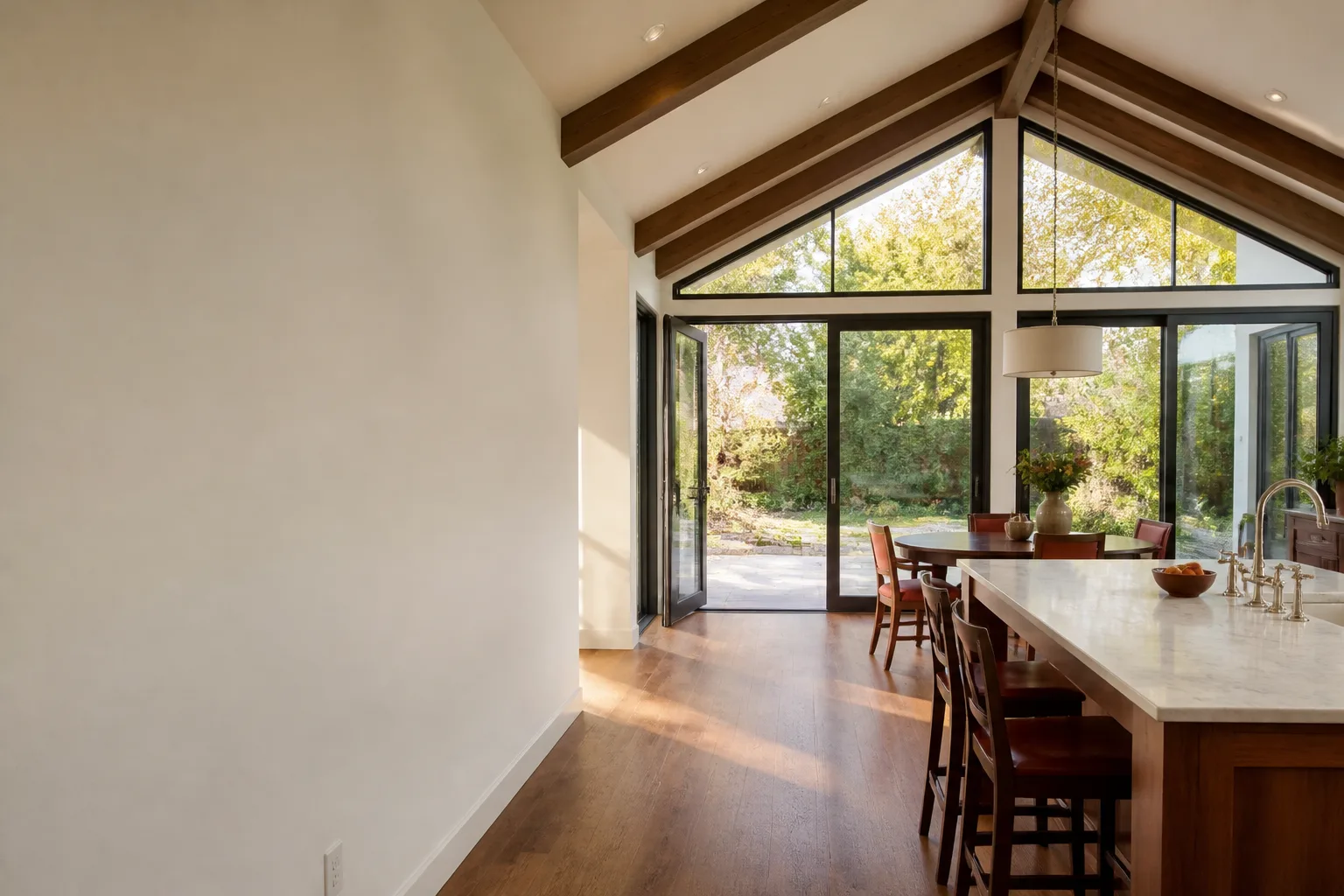
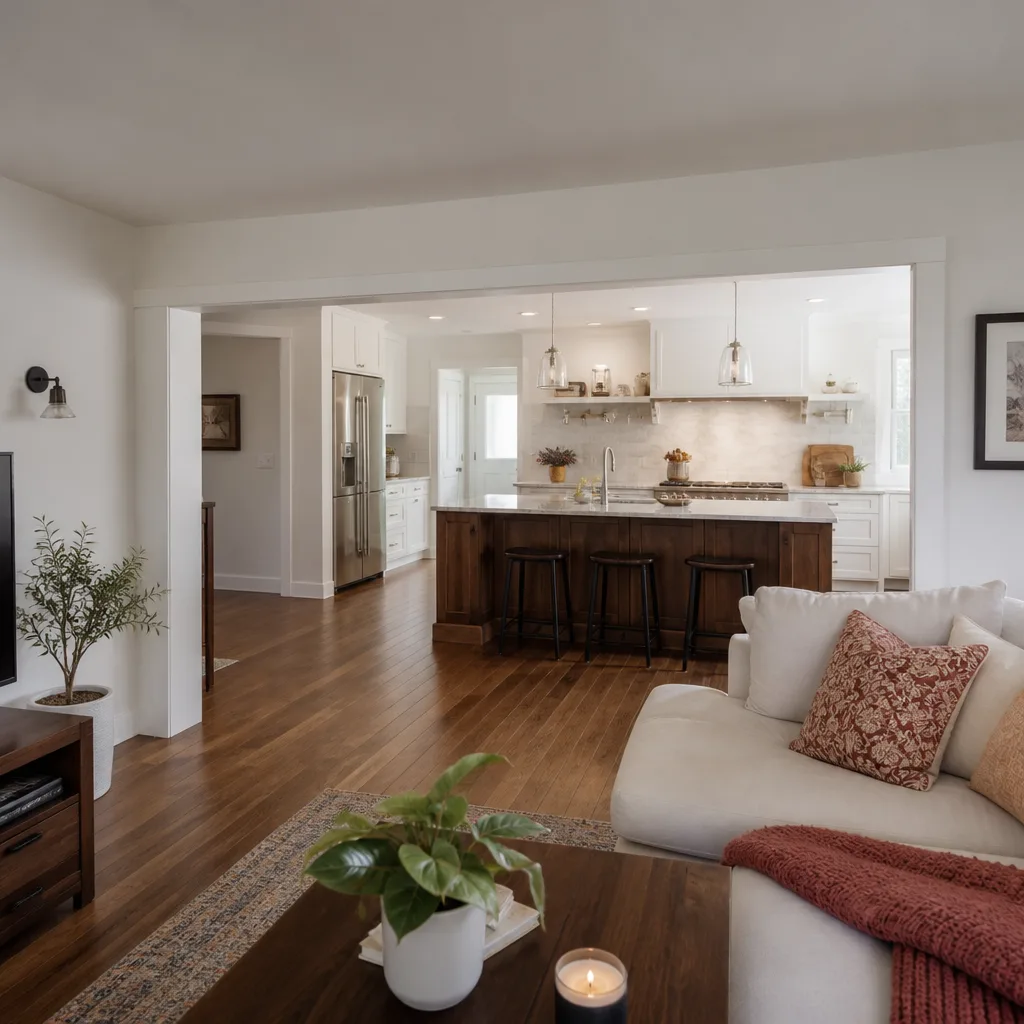
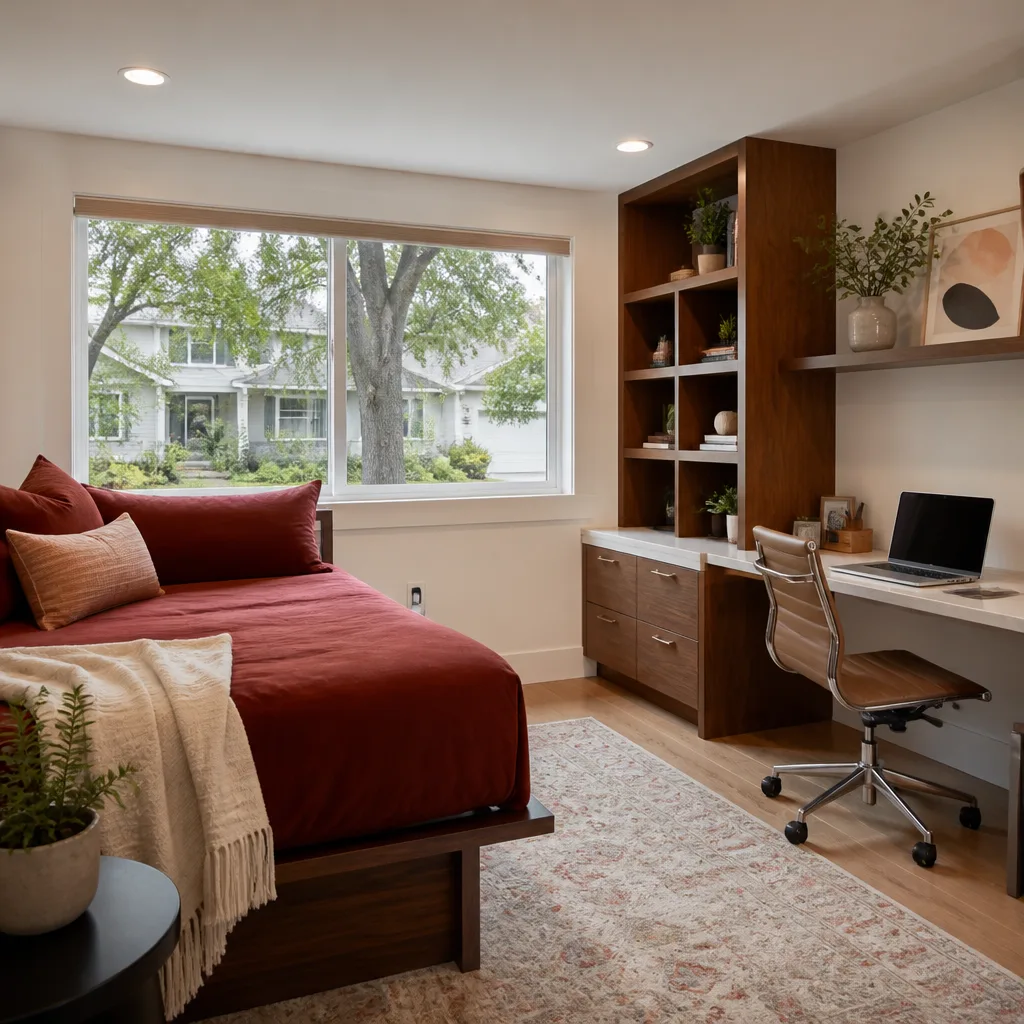
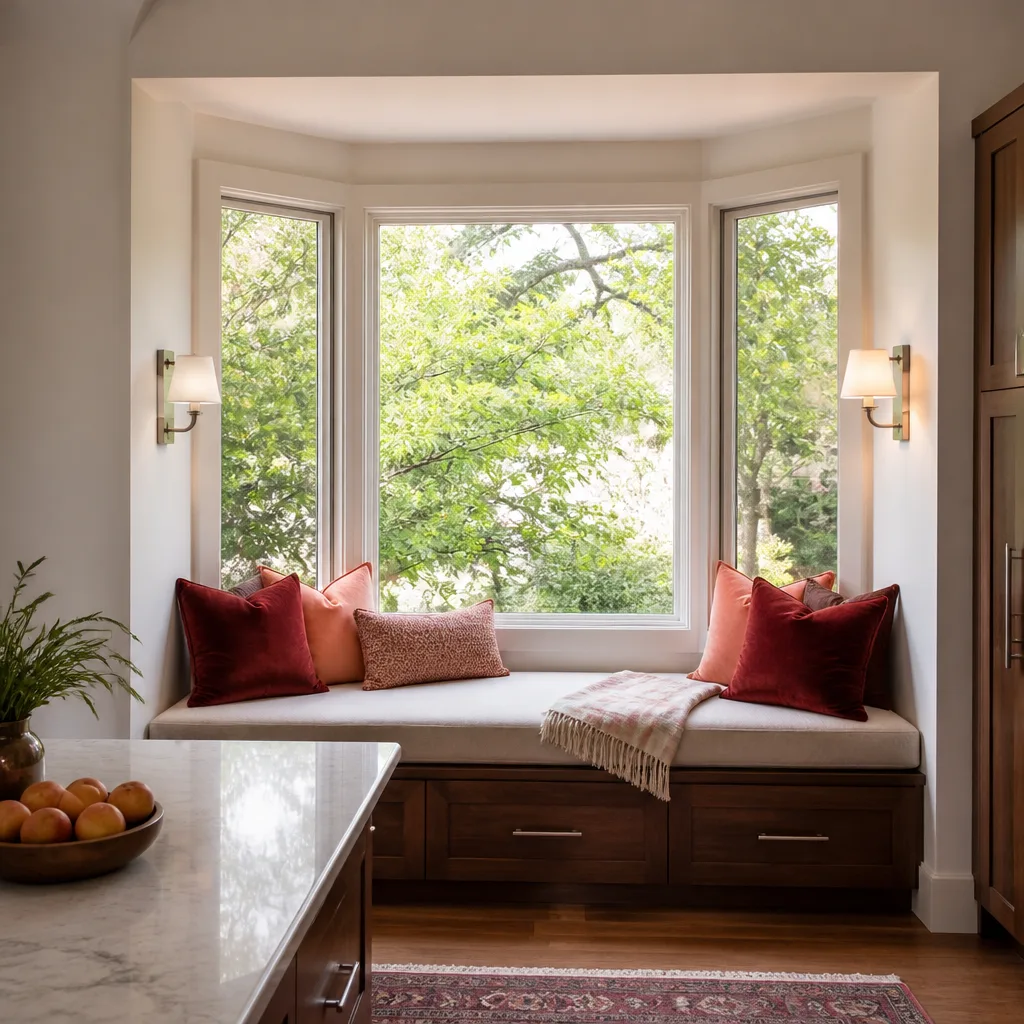
Free written scope consultation - allowances, timeline, and change-order rules on paper before a single trade is scheduled
CGI Home Additions & ADU: The Orlando Owner’s Guide
Home additions and ADU construction in Orlando typically runs $45,000–$130,000 depending on square footage, foundation work, utility runs, and finish level. If you have a CGI product failing inside an existing addition or ADU — a window that no longer seals, a door frame pulling away, siding that has warped in the Florida humidity — we can source the correct replacement and handle the repair as part of one scoped project. Most owners discover the problem the same way: a utility bill climbs in summer, a corner of the room stays damp after storms, or someone leans against a wall and feels give where there shouldn’t be any.
Which CGI Models This Applies To
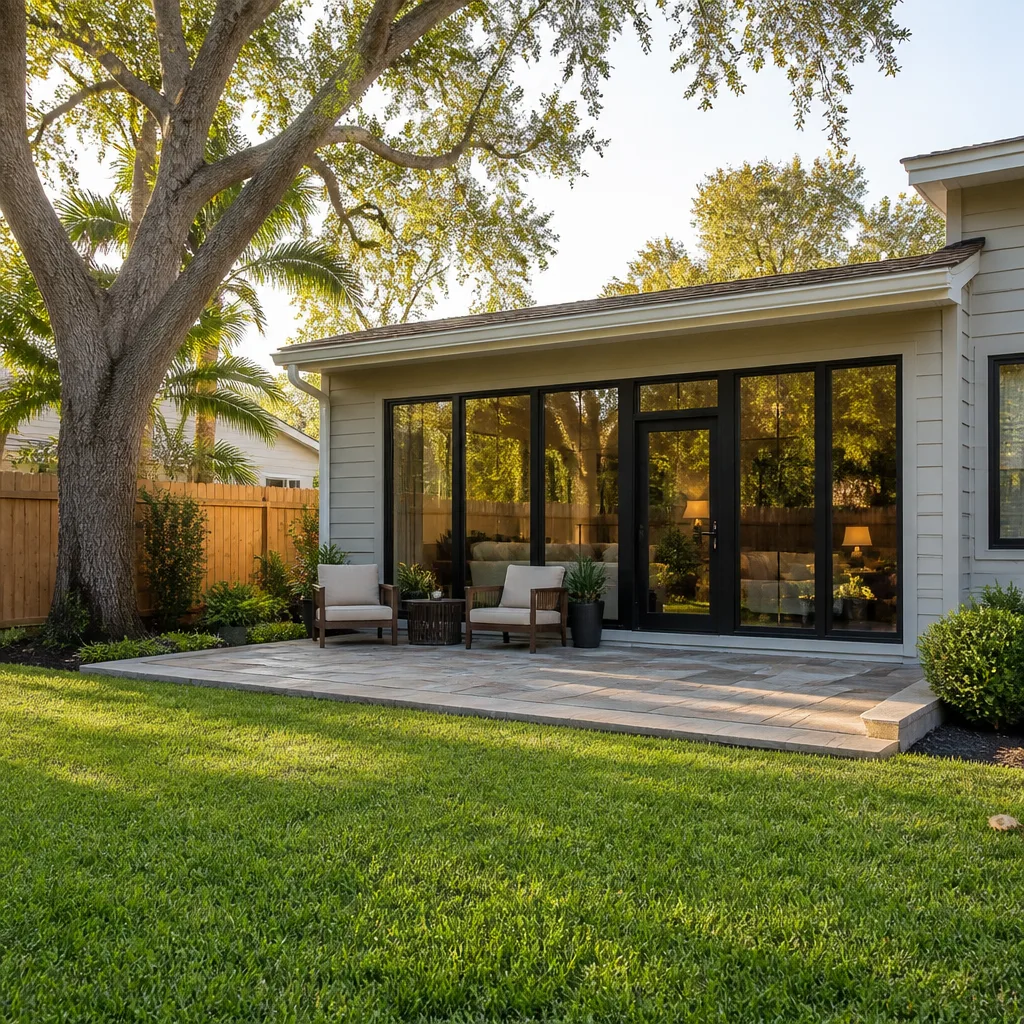
CGI manufactures impact-rated windows and doors, and the home addition or ADU you built around them has its own set of compatibility rules. The two product lines we see most often in Orlando additions are the CGI Estate Series and the CGI Sentinel Series. Estate Series windows use a thicker frame profile, which means the rough opening in your addition was framed to a specific dimension. You cannot swap an Estate window into an opening cut for a Sentinel without re-framing, which adds real cost. Sentinel Series products carry a narrower profile and are more common in ADUs where wall depth was limited.
To identify your model, check the lower corner of the window sash or the hinge side of the door panel for a silver AAMA label. That sticker lists the model number, the design pressure rating, and the manufacturing date. If the label is missing or faded, measure the visible glass width and the overall frame depth. Estate frames run 3-1/4 inches deep on standard units; Sentinel frames run 2-3/4 inches. This matters because an OEM replacement door panel will match your existing hardware and weatherstripping, while a quality aftermarket panel can save 20–30% but may require new hinge hardware. For Orlando specifically, we recommend staying with OEM or true-spec aftermarket because the wind-driven rain we get from June through September finds every gap in a panel that is off by even an eighth of an inch.
Styles & brands we work with







Signs Your CGI Home Additions & ADU Is Failing
- Condensation between glass panes. The insulated glass unit (IGU) has lost its seal. Orlando’s humidity accelerates seal failure because the constant moisture load flexes the sealant at the edges. Once the seal goes, the gas between the panes escapes and the window loses its thermal performance.
- Water staining at interior sills after heavy rain. This is usually the weep system clogged or the perimeter flashing failing. In additions, we often find the original installer caulked over the weep holes, which traps water inside the frame and rots the sill over time.
- Door panel drags or won’t latch cleanly. In Orlando’s clay-heavy soil, slab movement is common. The door frame may have shifted, or the hinges may have worn. What starts as a small drag turns into a panel that won’t seal against the weatherstripping.
- Visible corrosion on hardware or frame corners. Salt air doesn’t reach most of Orlando, but the humidity does. If your addition is within a few miles of a lake or you run a pool, chlorine vapor plus humidity attacks the frame finish faster than expected.
- Room feels hot in summer despite working AC. The energy load in an addition with a failed window or door is significant. We’ve measured 10–15 degree temperature differences between a room with sealed CGI units and one with a failed IGU.
See the difference
 Before
 After
After Before
 After
After Before
 After
AfterReplacement Cost & What’s Included
For a full home addition or ADU project in Orlando, budget $45,000–$130,000. Within that scope, replacing individual CGI windows or doors typically runs $800–$4,500 per unit installed depending on size, series, and whether the frame itself needs work. ADU construction as a standalone project in Orlando runs $90,000–$220,000 when you factor in foundation, electrical service, plumbing, and impact-rated fenestration.
What drives the range? Square footage and roof complexity are the two biggest factors. A single-story addition with a simple gable roof lands lower. A second-story addition or one with a hip roof and multiple valleys lands higher. On the window and door side, the cost is driven by size, series (Estate costs more than Sentinel), and whether the rough opening needs rework. Every quote includes the price for parts, labor, disposal, and the written 365-Day Done Right Promise. If the work fails within the guarantee period, we come back and fix it at no charge. A written price before any work starts is not a courtesy — it’s the rule we operate under.
DIY or Call Us?
There are things an owner can check safely. Inspect the weep holes. Look for cracked caulk at the exterior perimeter. Check for loose screws on the door hinges. Those are diagnostic steps — they tell you what is wrong. The repair itself is where DIY goes sideways. Impact-rated windows and doors are engineered systems. Removing a CGI panel without the correct technique risks breaking the glass or worse, compromising the wall’s structural opening. If the issue is a failed IGU, that is a factory-sealed unit — it does not get repaired on site, it gets replaced to spec. And any work on an exterior wall of an addition touches flashing, weather barrier, and interior finish — three layers that each have to be right or the leak returns. Call (850) 427-6454 and we’ll give you the number first, then pick up the tool.
FAQs
A properly installed CGI window or door in an Orlando addition lasts 20–30 years before the IGU seal fails or the frame needs refinishing. The Florida humidity shortens seal life by 5–10 years compared to drier climates. Mitigation, not prevention, is the realistic goal: keep weep holes clear and re-caulk exterior perimeters every 3–5 years. If you are shopping for a new addition, call (850) 427-6454 and we can talk about what lasts longest here.
Some components can be repaired: hinges, locks, weatherstripping, and rollers. The IGU cannot — a broken seal means a new glass unit. The frame can sometimes be saved if the water damage is caught early. If rot has reached the rough opening, the repair becomes a rebuild. We will tell you which path is cheaper once we inspect the unit. Call (850) 427-6454 for a free estimate.
Most single-unit replacements take 4–8 hours on site, including removal, any frame work, installation, and interior trim. If the rough opening needs re-framing, add a day. Custom-size OEM products can take 2–6 weeks to arrive from the manufacturer, so we always recommend ordering as soon as you see condensation or water staining. Call (850) 427-6454 to get the process started.
We stock common hardware, weatherstripping, and standard-size IGUs for CGI and compatible lines such as KraftMaid, Cambria, and Silestone for adjacent finish work. If your unit is a custom size or the panel itself needs replacement, we order to spec and coordinate the install the week it arrives. Either way, you get a written price before any work starts. Call (850) 427-6454 and we will check availability for your exact model.
Penhallow Remodeling Orlando is an independent service provider and is not affiliated with CGI.
Written by Trevor Nash, Owner, Penhallow Remodeling Orlando at Penhallow Remodeling Orlando, serving Orlando and nearby areas.


