
Free written scope consultation - allowances, timeline, and change-order rules on paper before a single trade is scheduled
Plant Prefab Roofing: The Orlando Owner’s Guide
Replacing roofing on a Plant Prefab home in Orlando typically runs $8,000 – $20,000 installed, depending on the roof’s square footage, pitch, and whether the underlying decking needs repair. We stock Plant Prefab-compatible roofing materials and can usually start the tear-off within a week of the written estimate. Most owners discover the problem the same way: a water stain on the ceiling after a summer thunderstorm, a shingle in the yard after a windy afternoon, or daylight showing through the attic sheathing. Give us a call at (850) 427-6454 and we’ll come out, get on the roof, and tell you exactly what you’re looking at, in writing, before anyone picks up a hammer.
Which Plant Prefab Models This Applies To
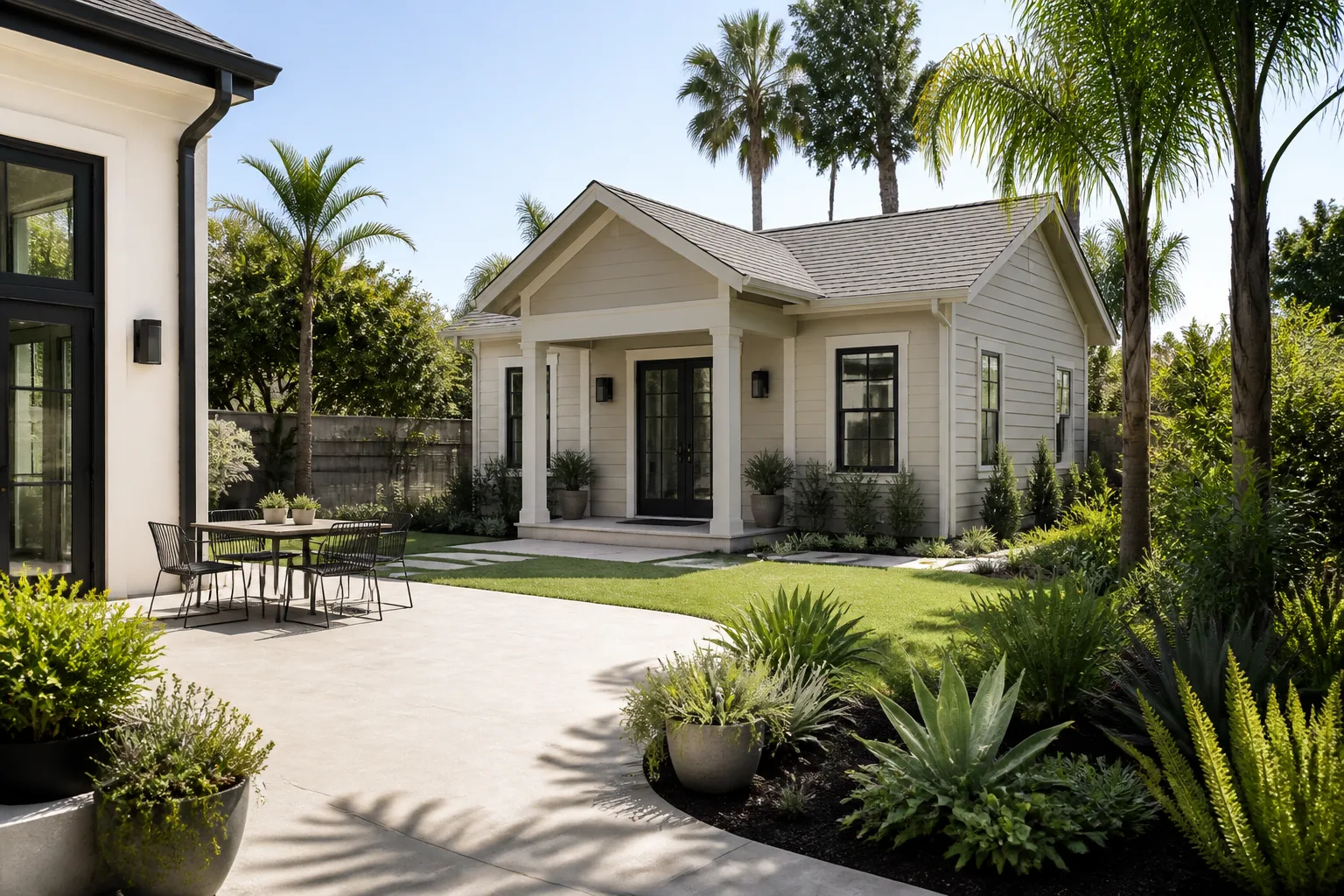
Plant Prefab builds homes in a controlled factory environment, which means the roof assemblies arrive on-site as finished panels rather than being stick-framed in your yard. The panelized construction process, while precise, creates a specific compatibility issue: the roof panels are built to accept standard dimensional lumber framing, but the connection details at the panel seams are where Orlando weather tends to find its way in. When we inspect a Plant Prefab roof, we look first at the seam flashing between panels and the penetration points around vents and skylights. If you can locate the factory label, usually stamped on the underside of the roof decking or on the panel edge in the attic, that tells us the exact panel series and the original material spec. For most Plant Prefab homes built in the last decade, that means a standard asphalt architectural shingle over a plywood or OSB deck, with a high-temperature underlayment. The OEM material is generally a mid-grade architectural shingle, and we’ll show you aftermarket options from the same manufacturers that meet or exceed the original spec without paying a premium for the brand name. The bigger variable is the underlayment: in Orlando’s heat and humidity, an underlayment rated for 10 years is not the same as one rated for 25, and that’s a distinction that matters more than the shingle brand.
Styles & brands we work with







Signs Your Plant Prefab Roofing Is Failing
- Water stains on ceilings or upper walls after rain. On a prefab panel roof, this usually means a seam or penetration flashing has failed. Panelized roofs have more seams than a traditional stick-built roof, and each one is a potential entry point. In Orlando’s afternoon downpours, a small flashing gap will show itself fast.
- Granules collecting in gutters or at downspout bases. The sand-like grit washing off your shingles is the protective ceramic layer. When it starts accumulating, the shingle is nearing the end of its serviceable life. Florida’s UV load accelerates this on south-facing roof planes especially.
- Curling, lifting, or missing shingles after wind events. A prefab roof is only as good as its fastening pattern. If the original install used staples or the wrong nail length, shingles lift clean off in a 50 mph gust. We see this regularly in neighborhoods like College Park where the older Plant Prefab homes have been through enough hurricane seasons to test every fastener.
- Visible daylight through the roof deck in the attic. This is the clearest sign. If you can see light, water can get in. On a Plant Prefab panel, the decking is usually plywood, and once water has been getting through, the plywood at the seams delaminates and sags. That compromised decking will need to be replaced during the re-roof.
- Attic heat that feels excessive even on mild days. Poor roof ventilation is common on panelized builds because the factory design sometimes underestimates how hard Orlando’s sun works against a low-slope roof. If your attic is cooking, the shingles are cooking from underneath, and their lifespan drops accordingly.
See the difference
 Before
 After
After Before
 After
After Before
 After
AfterReplacement Cost & What’s Included
In Orlando, a full Plant Prefab roof replacement typically lands between $8,000 and $20,000. Smaller, single-story prefab homes with a simple gable roof sit at the lower end. Larger two-story models, roofs with multiple valleys or dormers, or jobs where the decking has to be pulled and replaced push toward the higher end. Before we write the number, we walk the roof, measure it, check the attic, and spell out exactly what’s included: tear-off of the old shingles, underlayment replacement, new flashing at every seam and penetration, new shingles, and full clean-up with magnetic nail sweep. The price we hand you is the price on the invoice, backed by our 365-Day Done Right Promise. If something fails inside that year because of our workmanship, we come back and fix it at no charge, in writing, as part of every job.
DIY or Call Us?
You can safely inspect your own roof from the ground: check for missing shingles, look at the eaves for granule buildup, and check the attic for daylight or water staining. What you shouldn’t do is get on the roof and start replacing shingles or re-sealing seams yourself. A prefab panel roof has load-bearing connections at the panel edges that may not handle foot traffic the way a traditional roof does, and a Florida roof in July is hot enough to cause heat exhaustion in under an hour even for someone in good shape. The bigger risk is that a temporary patch masks the real problem and gives water another few months to destroy the decking underneath. If you’ve spotted a problem, call (850) 427-6454. We’ll inspect it, photograph what we find, and give you a written price for the fix. No pressure, no upselling, just the number first, then the work.
FAQs
How long does a Plant Prefab roof last in Orlando? Most Plant Prefab roofs using standard architectural shingles last 15 – 20 years in central Florida’s climate. That’s shorter than the shingle manufacturer’s nominal 30-year rating because Orlando’s UV exposure, daily thermal cycling, and summer storm patterns accelerate material aging, particularly on south- and west-facing roof planes. If your home is approaching year 15, it’s worth having us check it before the next rainy season.
Can a failing Plant Prefab roof be repaired instead of replaced? Yes, localized flashing failures or a few missing shingles can often be repaired for $400 – $1,800. The question is the condition of the surrounding material. If the decking is solid and the shingles still have granule coverage, a repair makes sense. If the decking at the panel seams is soft or delaminated, you’re buying time with a repair, not solving the problem. We’ll tell you which situation you’re in when we inspect it.
How long does a re-roof take? Most Plant Prefab re-roofs in Orlando are a two-to-three-day job from tear-off to final clean-up, assuming standard decking condition. If we find compromised plywood or OSB at the panel seams, that adds time because the panels have to be cut back and the replacement decking fitted and sealed before the new underlayment goes down. We give you a defined arrival window before we start and the job site is cleaned at the end of every day.
Do you stock Plant Prefab-compatible roofing materials? Yes. We keep standard architectural shingles, high-temperature underlayment, seam flashing, and ventilation components on the truck for Plant Prefab-compatible repairs. For a full replacement, we pull materials from the same manufacturers behind other brands we trust, including the suppliers we use for KraftMaid, Cambria, and Silestone projects, because the product quality behind the warranty matters as much as the labor. If you need a specific color or series matched to an existing section, we’ll source it before the start date and confirm it in writing on the estimate.
Written by Trevor Nash, Owner, Penhallow Remodeling Orlando at Penhallow Remodeling Orlando, serving Orlando and nearby areas.


